How Much Is Enough? Chasing Down A Robot
Thoughts
•
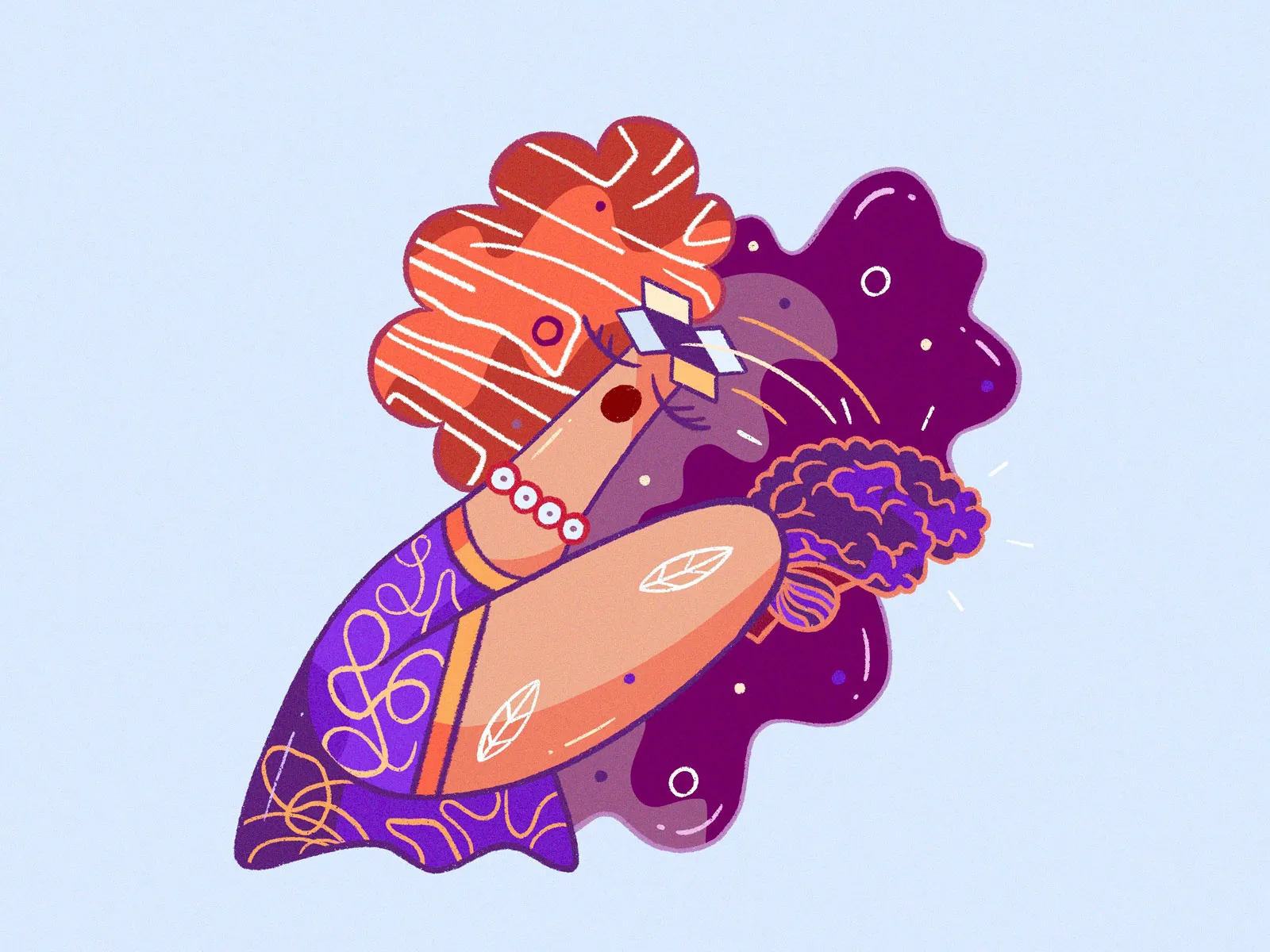
How much is enough? Efficiency at the expense of humanity? Toxic culture of constant optimization? Not feeling like doing enough? Getting ahead under the fear or staying behind? Constantly running? Overachieving? Unable to pause? To slow down? Just be?
When I think of an average person living and working in San Francisco in 2026, I imagine a human running after a robot.
Working hard to keep up with a machine to the best of their ability. Not quite reaching, but still determined to continue trying because, for some reason, letting go is not an option.
I don’t like this image.
It is true though that we’ve been living in a productivity-centric world for quite some time now. As someone born in Saint Petersburg of 1991, I feel like my entire life has been structured around continuous learning, task-mastering, and delivering results.
Now, classic Russian education is known to be harsh and demanding. Especially in Saint Petersburg that is a center of great schools, culture, and science. The schools are great indeed, but they come with a lot of pressure and unrealistic expectations that are enforced on children as a given from a very young age.
Later when I started traveling and living in other countries, I learned that these expectations exist in other places and mentalities. Executed differently, but often lead to the same outcomes: a shredded self-esteem, never feeling like doing and being enough, believing that love and approval should be earned through hard work and can’t be given just because.
And the worst of them all: constantly feeling like a failure regardless of how much you’ve done, improved, and achieved.
Speaking of failure, let’s go back to that image of a human running after a robot for a second. Isn’t it obvious that a human is set to fail from the start? Why keep running? As species, we are aware enough to know that humans will never be robots the same way as robots will never be human.
So my question is, at which point enough will finally feel like enough? At which point will we stop running?
I don’t know, but I think about it a lot. Especially now that tech companies are aggressively developing and pushing unethical AI regardless of the cost. Leading to mass job eliminations in the most human of the disciplines: arts, literature, music, psychology, teaching, and others.
Disciplines where human to human connection is essential. Disciplines that are being remarketed to drive more profits.
Even though I was growing up under persistent expectations to do and achieve more, those expectations were focusing on stretching my individual capacity for overachieving while staying in full control of execution.
In other words, getting to the state of burnout by doing the maximum I could possibly do at a given moment and performing all intellectual and physical processes necessary for completion by myself.
That’s right, by myself. With my own hands. In my own brain. Actively exercising my analytical skills. Without delegating to AI.
(I understand that the physical component varies depending on what one does for work, but because I draw for living, being in full control over the physical doing is important to me).
And because I was not delegating, I eventually reached a point where I couldn’t take on more tasks. I call it my personal absolute maximum. “A point of failure” as my piano teacher would prefer to say it.
Failure or not, I believe that this point exists. It’s individual for everyone and highly depends on many factors like personality, age, environment, education, health, professional background, nature of work, talents, life experiences, and so on.
It’s not a static number, and it naturally fluctuates as all the aspects that define it can change at any moment. And in my personal opinion, before AI chatbots became accessible to everyone a few years ago, we were much more comfortable acknowledging and talking about this number. Our “point of failure”.
It’s questionable, but to me it feels like before AI, we were much more at peace with understanding and addressing our very human limitations, and we weren’t trying to chase down a robot.
In fact, burnout and setting boundaries has been one of the most popular requests in therapy for quite some time now. Including mine.
By the time people go into therapy to address this issue, they’re well aware that they haven’t JUST reached their “point of failure”. It happened yesterday, or even several years ago. But it’s become disturbing and unbearable enough to actively seek help.
My therapist did a great job getting me to remember my limitations. She also helped clear the intoxicating fog in my brain that’s been making me believe for so long that I’m supposed to be a superhuman. A superwoman. A fucking rockstar day or night.
A rockstar that never felt like enough.
Until a couple of years ago when I was finally able to break the chain connecting my self-worth to how much work I’m always doing, and how much money I’m making, and how many acts of service I’m performing, and how many books I’m reading , and many other manys.
It sounds horrible, but to be fair, given my background and demographics, it would almost seem unusual for me NOT to be this person. Because cultural background matters, and it’s hard not to be influenced.
(It’s also hard to fully understand how influencing works and become more aware of it when you have little to no space for anything other than doing).
Anyway. As a millennial, if I could use one word to describe my main motivation for doing anything for most of my life I’d pick “self-improvement”. A phenomenon that was pretty much inspired by Stoics and Superheroes.
I know I’m simplifying here, but I do it on purpose to stress that robots were not in the picture. At least, not in a positive way.
As a kid, I read a lot of mythology, philosophy, classics, and comics. But my true love and mental escape that I share with many people of my generation was always fantasy. The Chronicles of Amber, The Lord of the Rings, Narnia, Harry Potter, and others.
The idea of having magical abilities and being of a different fantastical race was exciting to imagine not just because of our desire to be something “more” and do “more”, but because we were capable of associating ourselves with these imaginary characters.
Elves, and orcs, and mages, and all the other creatures have a heart beating in their chests. Have a brain thinking their thoughts. Have a soul defining their personalities. Have emotions, and dreams, and goals, and aspirations.
Evil or good, what they all share in common is humanity. And they also share it with us as humans, and as readers.
Robots were never this way. When I think about robots as a millennial, first things that come to mind are The Matrix, The Terminator Saga and George Orwell's 1984. Which don’t portray technology in a particularly exciting way. In fact, most of the time sci-fi stories are about robots taking over control, enslaving humanity, and destroying us as disturbingly imperfect species.
So why on earth in 2026 are we starting to run after a robot in desperate attempts to keep up and take after?
Exactly. Because a small group of very rich individuals decided to make even more money and reshape current trends.
You may disagree, but as a recently recovered workaholic and social media addict, I am finally succeeding at being able to notice how propaganda and digital manipulation are reshaping the world regardless of the country I live in.
It took me a while to learn how to purposefully exit my immediate emotional state and step into a position of an observer. I am very proud of it because, in all honesty, it’s very hard to do when we’re constantly being bombarded with information carefully curated to take our stress levels over the roof.
It is hard, but when I succeed, I can clearly see how the discourse is systematically changing to embrace the AI. To allow it become our extension. To allow it aid us while reshaping how we think, how we express ourselves, where we get information, and what that information is.
I would also go as far as say that it’s being designed to enslave us, but not in a Terminator kind of way (yet).
I am seeing a reality where people in power created a tool that is going to help them stay in control, preserve currently existing dysfunctional systems that stink of inequality, level everyone to a standard that they see fit. The one that doesn’t ask too many uncomfortable questions and is easy to rule over.
I am also noticing a lot of conversations around anti-aging that lead displacement of government funds that are meant to support current elderly population. I’m seeing a lot of emerging companies promoting bio-hacking and injectables that didn’t get any sufficient testing. I’m seeing normalization of plastic surgery and face lifts.
Anti-aging does not mean aging in a healthy way. It’s a term that refuses to accept our human reality of aging. It means “to prevent or limit the process of becoming old”.
Bio-hacking is not biology. It’s also hacking, a term that means “the gaining of unauthorized access to data in a system or computer”.
Plastic surgery is not just surgery. It’s also plastic, “a synthetic material made from a wide range of organic polymers such as polyethylene, PVC, nylon, etc., that can be molded into shape while soft and then set into a rigid or slightly elastic form”.
I know that in a way, it’s a “forced” wordplay exercise that I just did, but when I start looking at the world under this perspective, my perception changes.
The new trend is pushing us to not only chase down a robot, but as much as possible, become one.
Going back to the point of “personal failure”, I can see how that is being reimagined as well. ChatGPT, Claude, Perplexity, and other products are here to make us even more productive. To make us faster. To get us to accomplish even more.
And maybe, just maybe, I wouldn’t be as opposed to embracing it, if it didn’t drive so many lay-offs. If it was ethically developed and respected consent. If copyright meant something. If there were strong legal regulations in place. If tech leaders weren’t Indulging in sports of getting advantage of legal loopholes. And many other ifs that I wish did not exist.
I will also admit that I am not excited because I am simply tired. Of overachieving, of speed being the main metrics of success, of social media that takes advantage of human weakness, of the cultural phenomenons that don’t celebrate humanity, of systems defined by greed and inequality.
So, how much is really enough? Efficiency at the expense of humanity? Toxic culture of constant optimization? Not feeling like doing enough? Getting ahead under the fear or staying behind? Constantly running? Overachieving? Unable to pause? To slow down? Just be?
I really want to know.
Thank you for reading.
Share
Copy link