AI Is The Next Design Tool... Right?
Sketchbook
•
Not all automation is created equal. Right? Right. Lately, I’ve been seeing a lot of discussions in the design community where generative AI is being linked to and merged with the long-existing automation of our digital workflows. I’m talking image desaturation, magic wand, live paint, and other examples of content-aware tools we’ve been using forever.
However, claiming that Generative AI is a natural extension of these processes is quite a stretch. So much so that Hercules and his “Go the Distance” song pop up in my head.
(Yes, I live my life in songs, and I wouldn’t be surprised if Rob Harvilla was somehow one of my DNA relatives).
I mean, I understand the appeal, but unlike Hercules who doesn’t care how far he’ll go, I do very much care when it comes to Gen AI and automation. Similar in nature, but different in principle.
Before I proceed, I have to say that every time I publish an essay on the topic of AI, I secretly hope for it to be the last one. Because I genuinely don’t enjoy participating in discussions that divide and radicalize my colleagues in creative industries.
So why do I talk about it then? Three reasons. First and foremost, I do it for me, myself, and Olia. To process and structure my thoughts, separate them from emotions, and shape my argument in a logical and distilled way.
Secondly, I believe that as a creative professional who was affected by unethical training and harmful marketing around current commercial AI models, I have a certain responsibility. To contribute in how we talk about this tech during this messy time. To shed light on the past fifteen years of lived experiences that are being distorted in media to justify AI in its current shape and form.
Lastly, I am a mother. Soon, my son is going to be old enough to have proper conversations about AI-generated materials, AI usage, and the ethics behind it. I write these essays to better prepare myself for these conversations, and to track the progression of how the public discourse changes around the topic in my industry.
In a way, AI is like social media 2.0.
(I know, I’m all over the place, but my essays don’t care about reader retention enough to censor the flow. Automation is around the corner (paragraph?)).
I think as a society we would be better off without social media, but because we went through almost two decades of its evolution, we’re now presented with a great opportunity to push back and question. Do more of what we didn’t do enough before companies cemented the predatory algorithms and psychological manipulation. Do it early and document it to stay in touch with our personal judgement and truth. Make different choices and ask for alternatives.
That’s exactly why I’m writing this essay. To insert my whys in the middle of the new logical chains forming to smoothly connect Generative AI and pre-AI automation. Or, the way I see it, to make for a perfect sales pitch. Because Claude Design is here, Lovable is trending, and the next Config is happening next month (yay?).
I think the reason why the center of AI discussions is moving away from ethics to automation is because selling AI to designers is easier if calling it a “tool” becomes a common occurrence in our language. And to sell AI as just another tool, there needs to be a way to marry it to the tools we've used for decades.
Healing brush. Image Trace. Pathfinder. Generative AI.
No, ladies and gentlemen. There’s no place for Generative AI in line with these tools, and I disagree with the framing that AI has been around forever that’s supposed to justify it being on the list. In fact, I still don’t understand what it is exactly that we call “AI” to market it as a design tool. Bear with me, I now want to find out.
In terms of function, Artificial Intelligence doesn’t represent any specific tools or processes. Instead, it covers a wide range of very different things snowballed together. Conditional logic (if → then). Machine learning (pattern recognition). Computer vision (image recognition). Natural language processing (understanding humans). Generative models (fabrication).
So when we talk about “using AI forever” in relation to the pre-AI design tools, we’re supposed to be talking about all of these parts. Which is.. false, because none of the tools it’s being referenced to cover this range.
My favorite pathfinder (union, intersect, subtract) is based on math (the fancy word for it is computational geometry). Image trace is computer vision that detects edges by color thresholds + geometry. Magic wand is rule-based and looks for color similarity in adjacent pixels. Image desaturation is math. Healing brush (patch-matching) is computer vision.
See why I’m frustrated (whoever you are)? We haven’t been using AI forever. The more accurate version of the statement is “We have been using tools based on some components of modern AI technology that have been around for a very long time”.
At first it might seem like the difference is minor. Why should we even care? Great question.
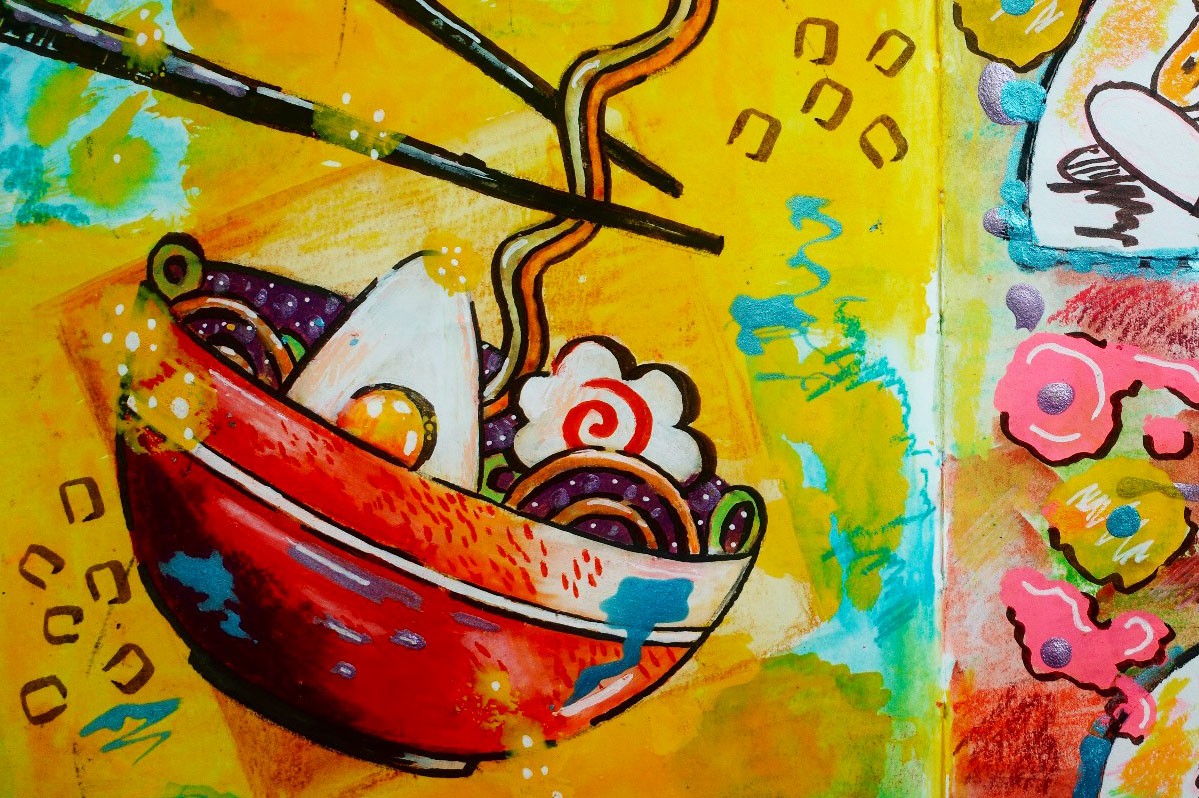
We should care because when this argument is used to market AI, it’s being used to specifically market Generative AI. Not computer vision. Not math. Not conditional logic. And it’s not just any Generative AI, it’s a Generative AI trained on unconsented visual data. Something that none of the tools it's being linked to needed for existence. Remember my Hercules analogy? That’s exactly what I call “Go the distance”.
(Tired? I am not done yet).
In everything I’ve written so far it might seem like I’m objecting automation. No, I’m not. If I did I would be rejecting decades of history. I love history. Phototypesetting machines, Dry Transfer Lettering, Ivan Sutherland's Sketchpad, Electronic color scanners. This is all automation.
AI is automation, too. But unlike any previous tech, the revolution comes from merging together different types of tech + enormous datasets scraped in secrecy without asking permission. If we remove those enormous data sets, we are not going to have Claude Design. We are not going to have Lovable. We are not going to have any current commercial AI models dominating the market.
We are also not talking about the same nature of automation. Unlike Image trace or Pathfinder, Generative AI doesn’t recognize, isolate, and manipulate objects created and chosen by designers. Instead, it fabricates. It produces the part for designers based on the vastness of its training data. Replacing craftsmanship with curation.
“I will please the Gods… I can go the distance”.
Um, where was I?
A stretch. You may disagree, but as an illustrator and designer, I see this entire “Gen AI = automation - because - just next tool” formula as a big, biiig problematic stretch. I tried to explain the “big” part to the best of my technical knowledge. The “problematic” part is often controversial even though it really isn’t.
I understand that it’s always easier not to think about the ethics when engaging with product that helps to solve problems faster and cheaper. The current version of capitalism conditions us to.
I also understand that if we could trace all the products we’re using in our day to day lives back to their creators, we’d uncover a lot of ethically depressing truths. Knowingly or unknowingly, we’re all complicit. At the very least because in order to be functional parts of modern society that exists within problematic systems, we don’t have a choice to fully opt out.
I get all that.
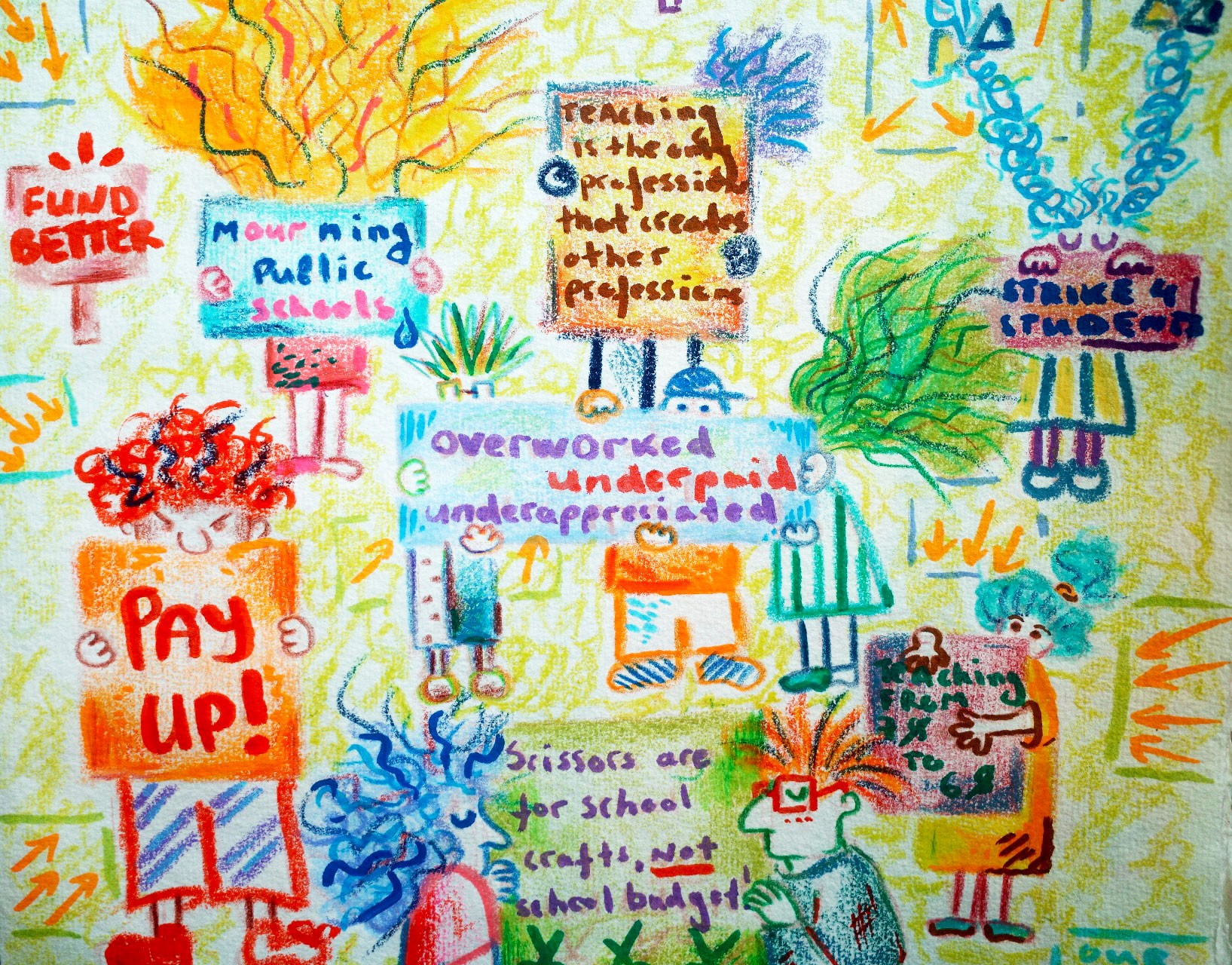
However, when it comes to watching how tech leaders and governments are aggressively and unethically pushing for a product that seems to be worth more than human lives, I don’t want to stay silent. I don’t want to pretend it’s ok. I am going to insert my remarks when I see informational manipulation, and I’m going to push back and ask for better alternatives.
We deserve better alternatives. We deserve ethical products.
We don’t have them now, but I do believe that eventually we’ll have a more humane and less destructive version of AI. Though I can’t help but wonder how many illustrators, designers, creatives, people are going to lose their jobs before that happens? How many are going to be pushed to use and train AI through fear-inducing marketing?
And also, I wonder how many people will have to leave their homes because of data center construction? How many pandemics will happen because of AI? How many people are going to die in wars for no reason but military data collection? Before we finally get to the point of revision, regulation, and correction?
I don’t know about you, but I don’t want to find out. I’d rather grab Hercules by the foot and drag him back to where we are now. In a very messy and fully avoidable reality.
Share
Copy link