Attention! Pay Attention To Your Attention
Sketchbook
•

In the past couple of years I’ve become increasingly possessive of my attention. My darling attention. How I give it. Where I give it. If I should give it? Pay it? Share it? How much of my attention is being extracted against my will? How often? What can I do to minimize it? How soon can attention economy burn into oblivion while I dance around its ashes?
Mwahaha. Not soon enough. I swear, I’m not evil. Attention economy is though.
While for many people a wake up call around attention arrives after examining their relationship with tech companies and politicians that set up systems to control and harvest us for profits, my personal journey to examining my attention under a magnifying glass didn’t start with Instagram, ads, and digital exhaustion. No. It started with my son Oliver.
When Oliver was born, I was not just figuring out motherhood for the first time. I was figuring out motherhood in a country with no national paid leave and close to nonexistent parental benefits. I was figuring out motherhood while also figuring out the COVID pandemic that started a month before my due date. I was locked up at home, and my only support system was my fellow inexperienced husband.
During that interesting time, I started noticing my attention for the very first time. Or more accurately, mourning my ability to hold it for longer than a few minutes while simultaneously forgetting any informational load that didn’t relate to children or COVID. Forgetting that I put my toothbrush in a fridge (a very real thing) and also forgetting the version of myself that existed before this transition.
When Oliver was a baby, my entire being was wired to keep him safe and supported. Relentlessly giving and being anything and everything he needed me to be. A very normal reality of caring for a new child, and a very severe imbalance of attention given externally and internally.
In the first four years of Oliver’s life, my attention was continuously paid outwards. Both, intentionally and forcefully. Intentionally when I was naturally giving my attention to Oliver and forcefully when I was reacting to his requests for my attention in the moments when I turned it somewhere else. My husband. My parents. Household tasks. Work. Friends. News. Tech. Also intentionally and forcefully.
There was little to no space for my attention to be directed internally, back to myself. In this reality, I not only struggled to reconnect with my own feelings and desires and set boundaries for self-preservation. But I was also in a vulnerable place where my attention could be easily extracted and monetized for a promise of a quick dopamine and a short-lived relief. Attention fracking in its full glory.
I’m not going to go into a detailed description of how tech companies take advantage of exhausted mothers and feed off their low self-esteem and permanent sense of guilt, but my exit from social media platforms began exactly then.
I wrote about it in my essay on why I no longer use social media. In short, I believe that tech companies don’t deserve my time, my art, and my attention. And because the social media system is set up within attention economy, there’s no way around the predatory nature of algorithms and decisions made by executives running these companies.
Speaking of predatory nature. Earlier this year, I read Attensity! A Manifesto of the Attention Liberation Movement by The Friends of Attention. This wonderful book took my understanding of social media to the next level by shining more light on something that’s rarely talked about in common criticism of tech companies: research that became the foundation of attention economy and shaped how we define attention in the 21st century.
When we talk about attention today, we usually talk about our ability to stay focused on a task that’s often performed on a screen. A very narrow and specific definition that examines humans through the lens of our input and output. In such definition, distraction is described as unauthorized attention. The one that doesn’t align with expectations of those in charge.
The authors of Attensity! talk about how this research was sponsored by the advertising industry and the military-industrial complex to narrow down the way we think of our humanity and prioritize stimulus-response, as if there’s nothing else beyond that. Attention economy as we know it today inherited this research, scaled it up, and imposed it on us as a singular definition of being.
Yet another bleak piece of a puzzle of broken systems we live in, but also not surprising. When I read that chapter I immediately thought about ultra-processed food companies that choose and pay their own nutrition specialists to deliver data that supports their livelihoods and maximizes profits. Or pharmaceutical companies that choke international healthcare systems with patent monopolies and play their part in a reality where we still have diseases like tuberculosis circulating to this day.
But the most valuable part of Attensity! to me personally was a reminder of how attention is not this narrow quantitative thing that’s mostly visual and finite, but how it represents certain ways of being with the world and each other. How it’s shaped by our environment. How we can learn attention anywhere, and also unlearn it. On our own and together.
How it’s in the nature of human cognition to be dynamic and to be moving, and if we measure attention by our ability to hold long focus for the sake of high output, it is in a way a death of our spirit.
That last bit completely redefined my own perception of attention. When I think about what distraction is within this dynamic state, it becomes a natural shift of attention to a different subject. And because it follows the flow of cognition, it stops being the “bad” thing that current systems teach it to be. And if that’s the case, should we really perfect our ability to stay with one task for hours on end for the sake of doing more?
Not really, at least I don’t believe in it. Earlier this year, I published an essay about a human running after a robot. On how our productivity and output are increasingly becoming our defining characteristics, and how it’s taking us further away from our humanity. These characteristics are machine-like in the same way that we were taught to define attention. I didn’t make that connection at the time of writing that essay, but I’m making it now.
If the kids of today are born into a reality that’s designed to teach them about attention under this mechanical angle, how are they going to know any different? How are they going to imagine a different reality when adults in their lives have been meticulously trained for decades to make sure the system delivers desired outcomes? In a reality where everything that’s not tech needs to become tech to ensure seamless implementation?
I don’t have a definitive answer, but I do have some thoughts.
Last month, I attended a series of seminars on attention activism run by SoRA, The Strother School of Radical Attention. During these meetings, we had some incredible discussions that reshaped how I think about attention even further.
For example, we talked about the words we use when talking about attention. How “paying” or “giving” attention are the most common verbs we use and how we don’t take a beat to think about what they truly mean.
When we “pay” attention, we use it as currency. The very thing that attention economy is fueled by. When we “give” it, we usually don’t give it as the precious gift that it is. Instead, we give it as in giving something for free. Give away, or part with.
One of the participants proposed the verb “share” as a more fair and ethical way of directing our attention. I really like “share”. It made me think of how I often tell Oliver to “pay attention” when he gets distracted while talking to me, and how he shouldn’t really pay it. And how paying or not paying is a choice he should be able to make regardless if I like it or not.
Ever since that discussion, I started asking him to share his attention with me the same way he shares toys with his friends. In turn, I share my attention with him. In this act of sharing, we are not giving away our attention completely (the way I did when Oliver was younger), but it remains completely ours and we decide how much, when, and where to direct it.
To my surprise, he responded to this wording really well and started choosing to listen better. Of course, he still gets distracted, and when he does, I don’t get that bothered anymore because the way I see distraction is different now. More natural. Less “bad”.
Speaking of bad, I really don't enjoy thinking about AI being a catalyst for harvesting our attention. How yet again we use new technology to increase productivity and “pay” our attention alongside money which makes us the product. And how in outsourcing a bunch of tasks we can’t truly outsource the understanding that comes with the practice of doing something on our own. Especially creatively.
Reading and enjoying a book. Drawing an illustration. Composing or playing a song. Attending a seminar. Planting a tree. Writing an essay.
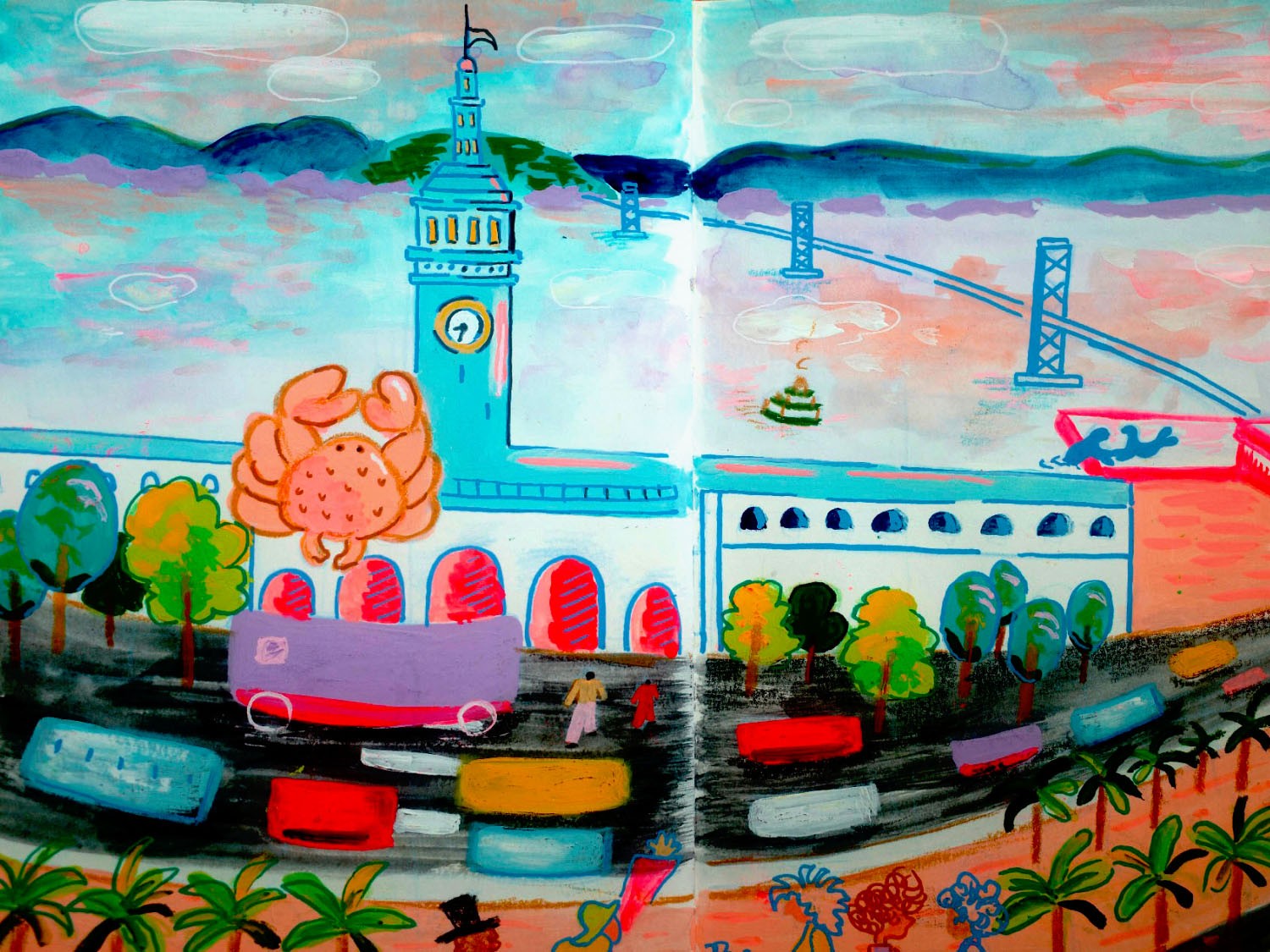
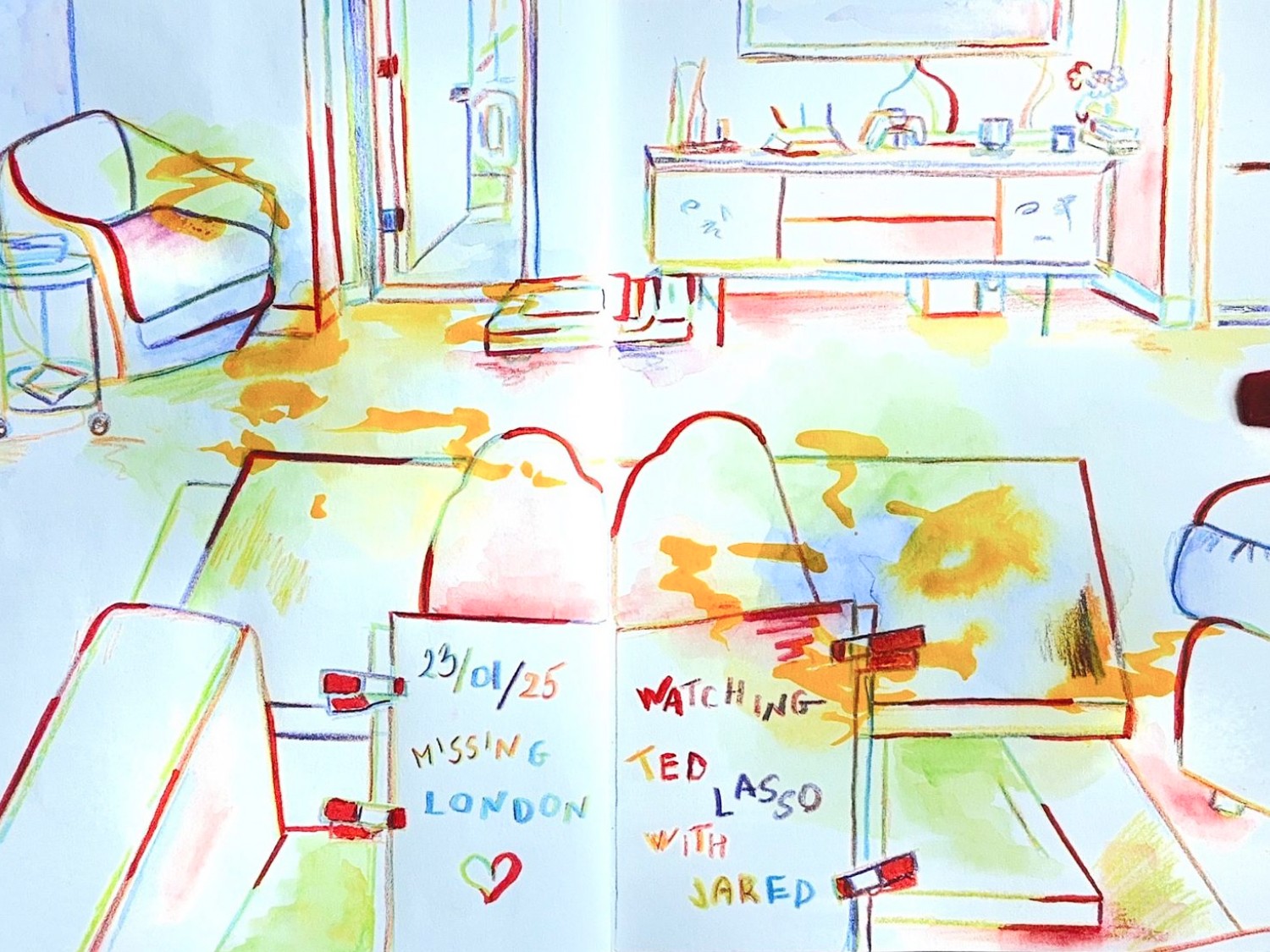
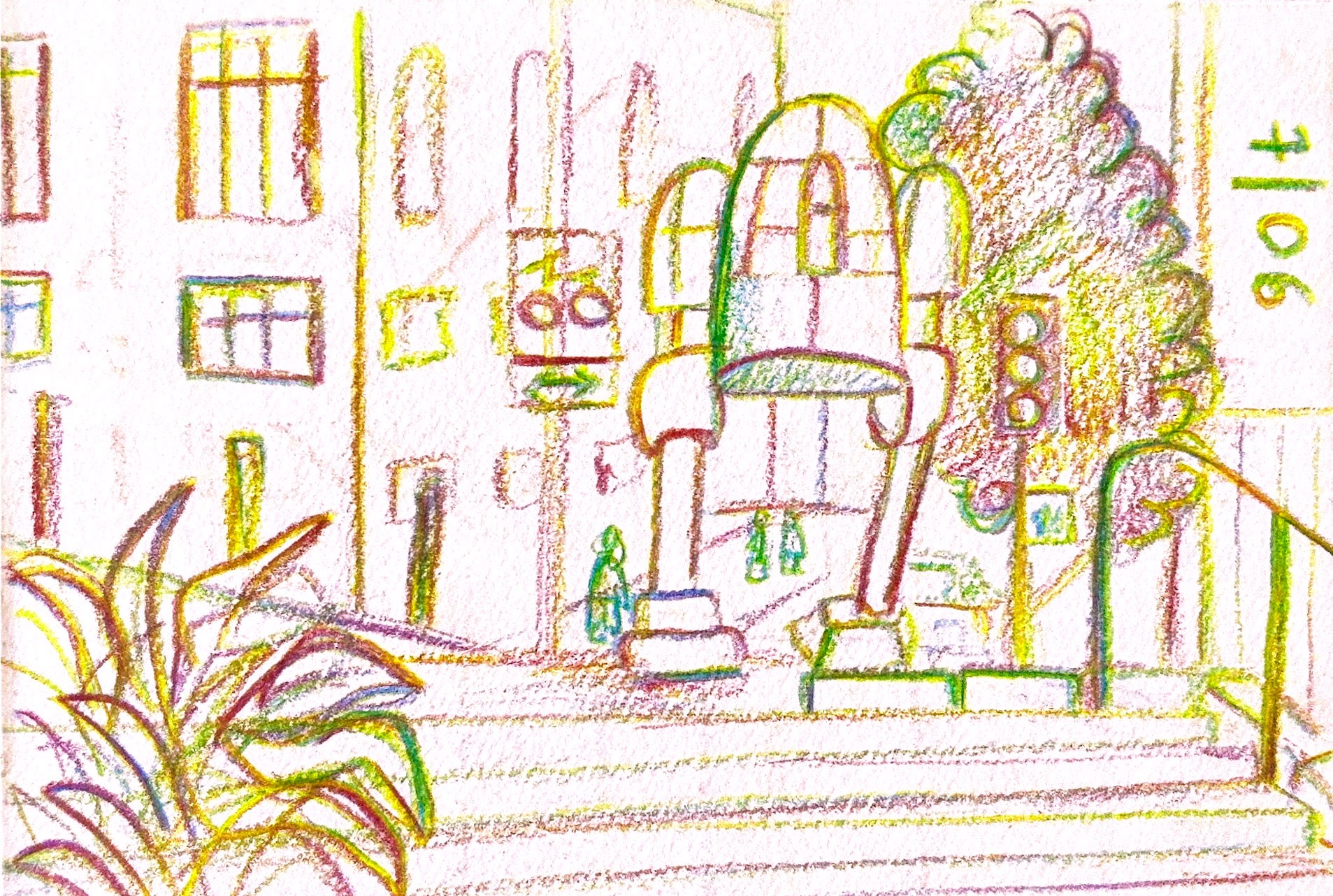
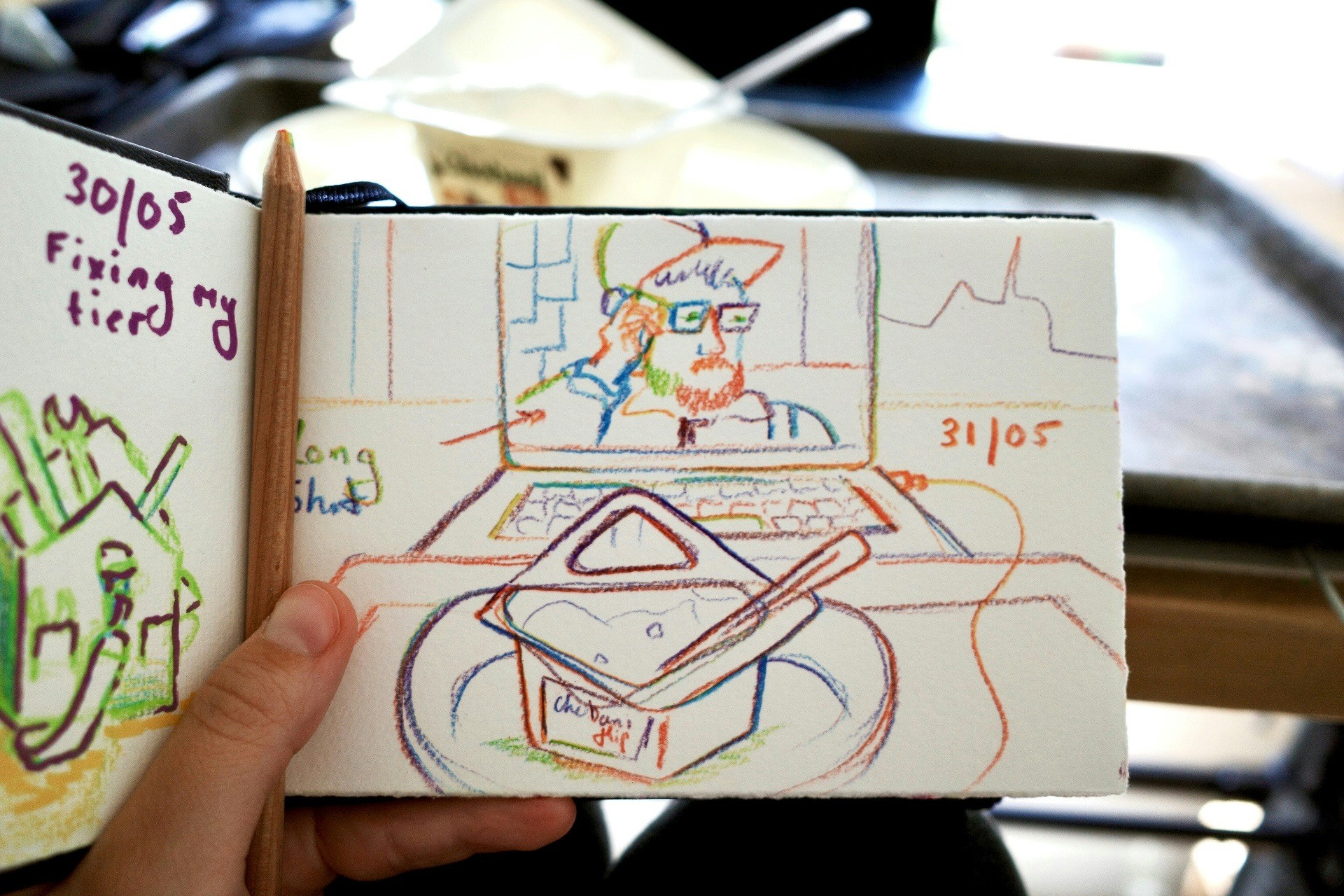
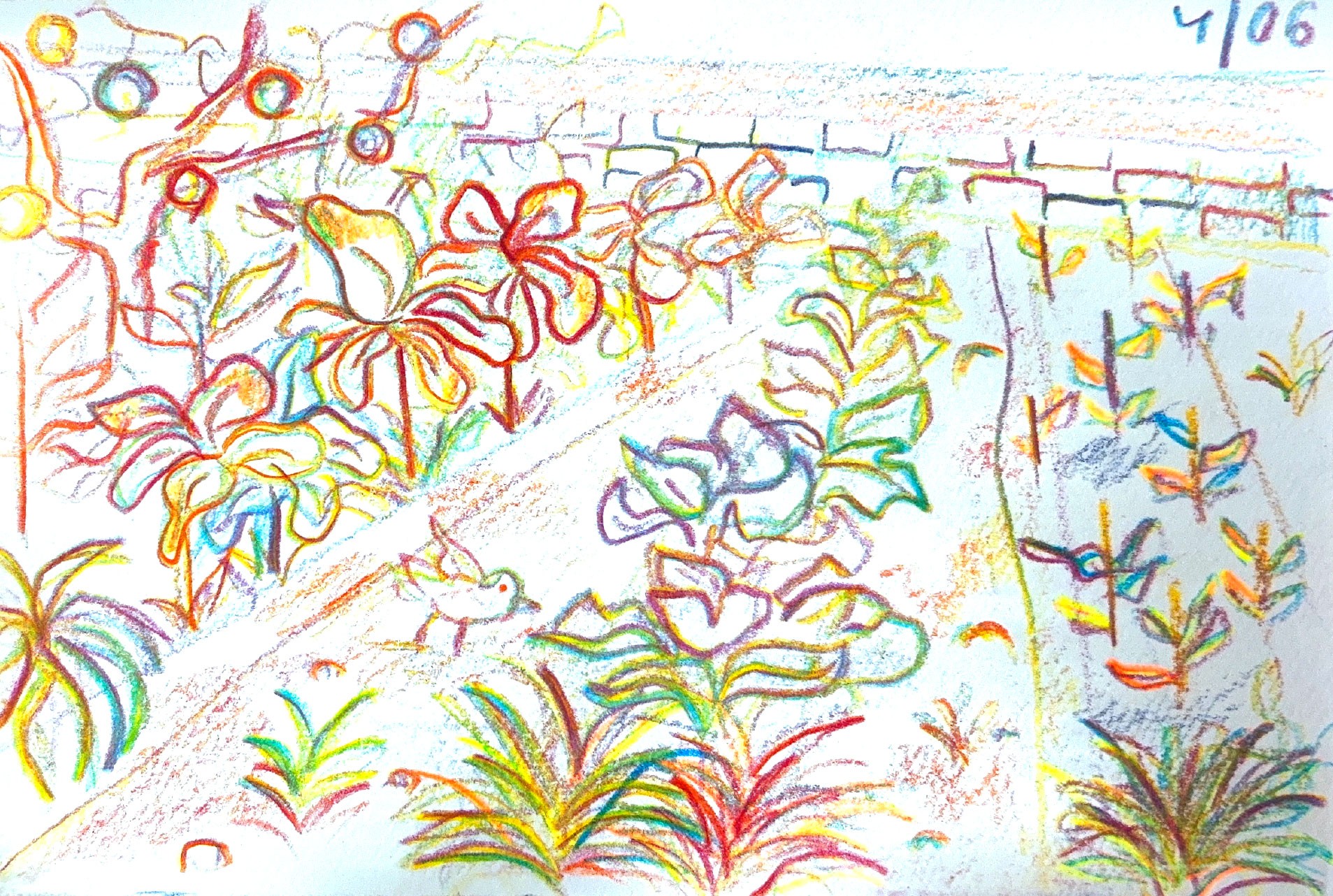
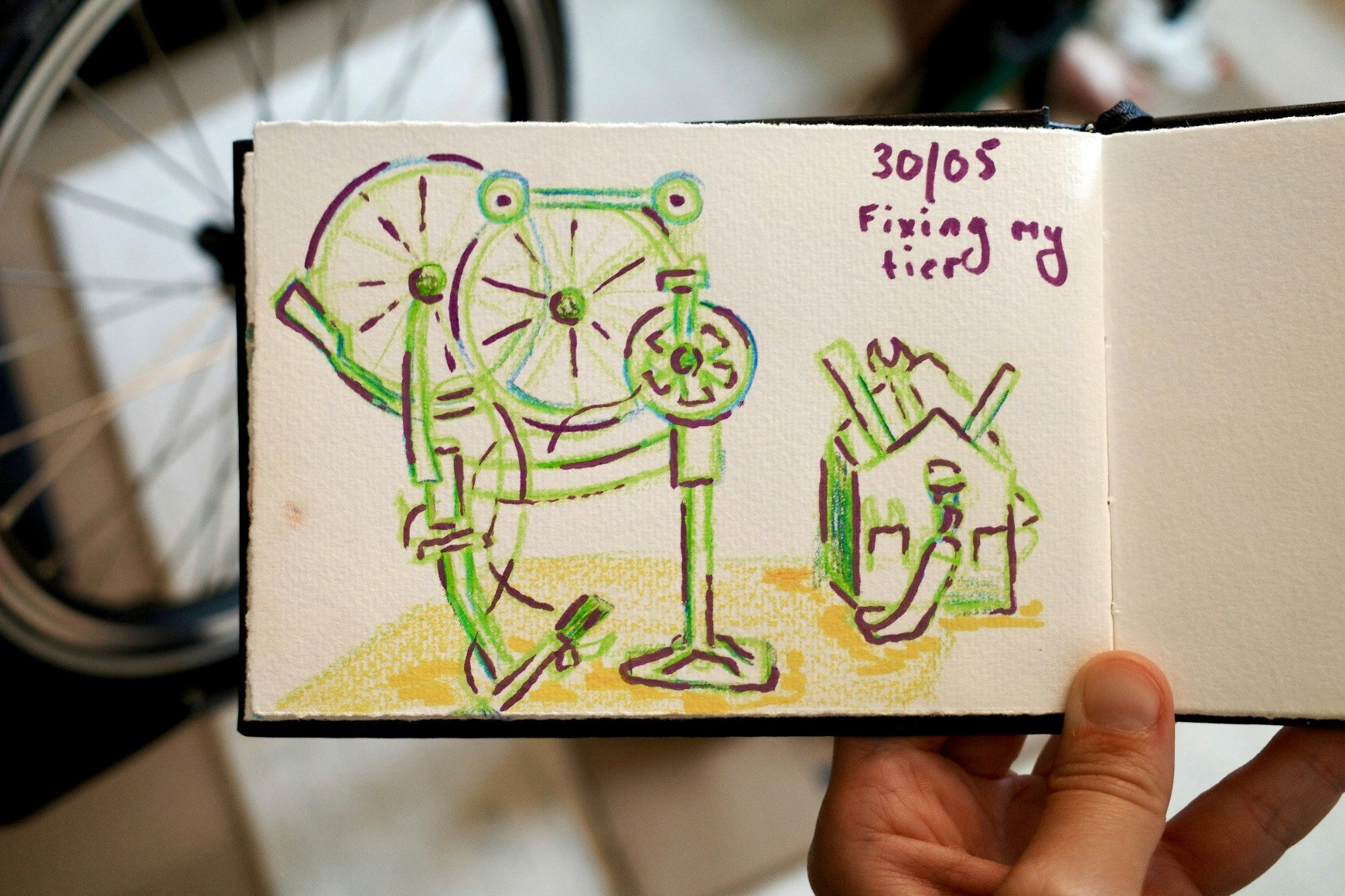
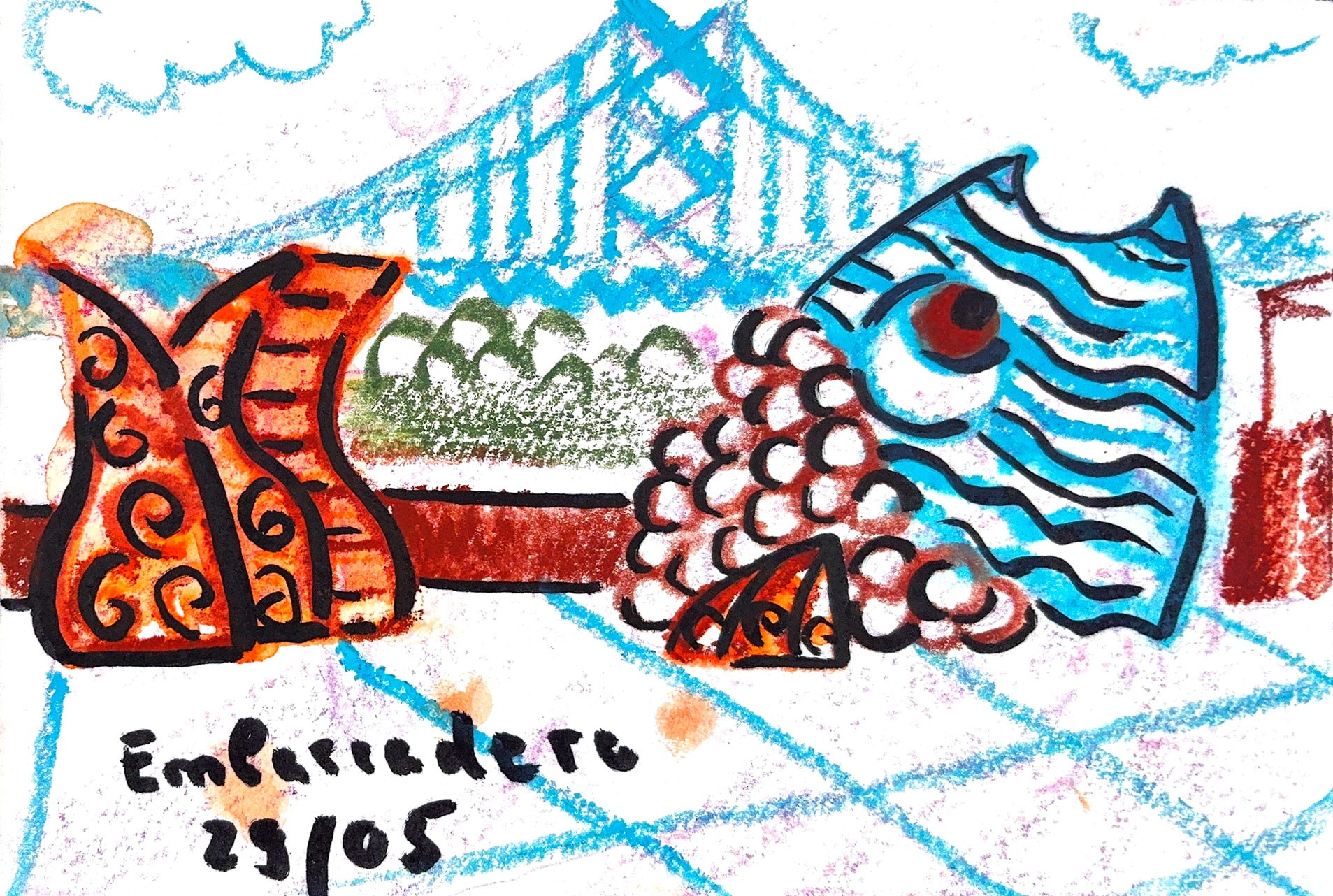
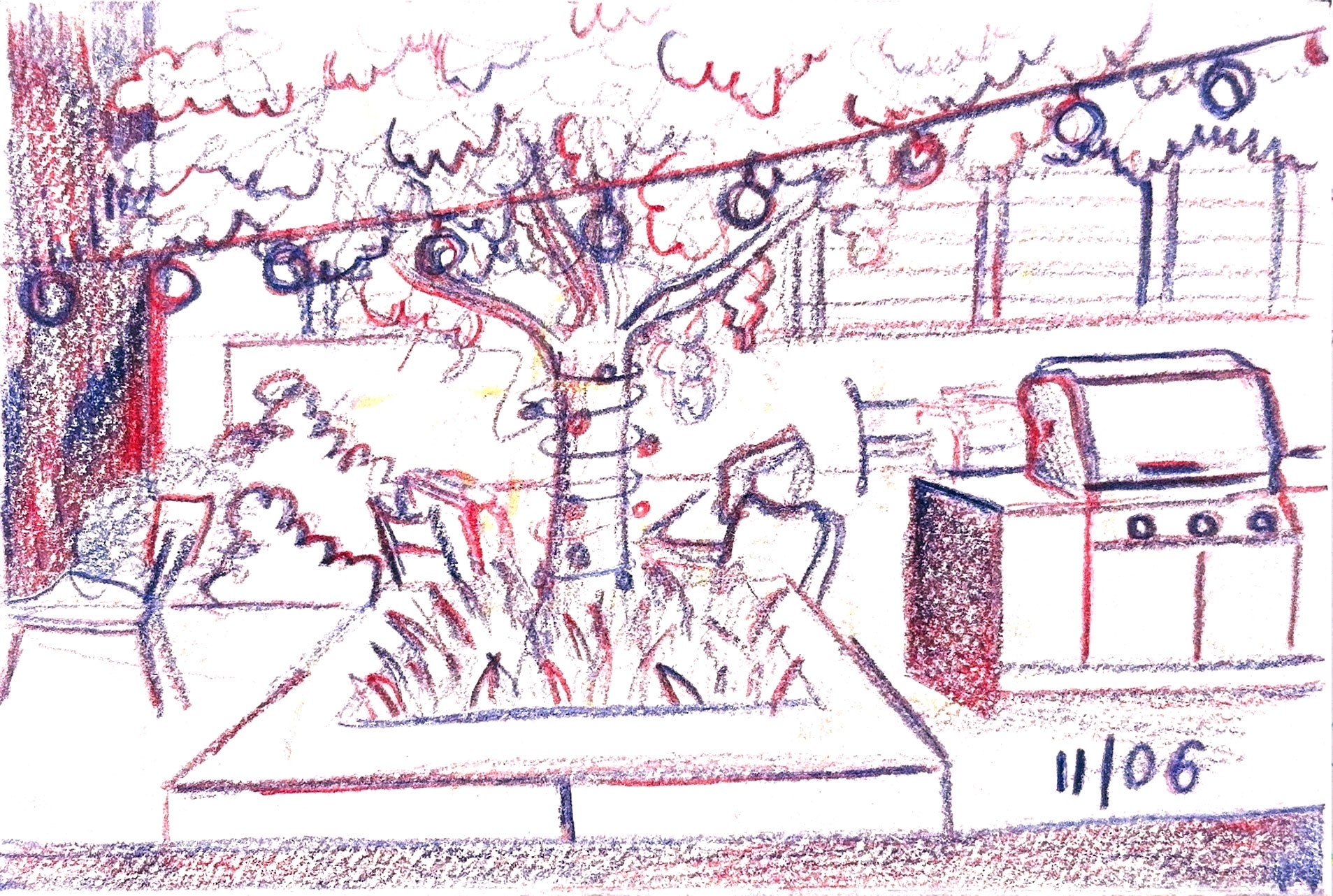
If in the AI era outsourcing becomes our default state, we have to create practices that help us preserve our attention alongside our understanding of the world. For example, I have a sketchbook that I use to make 10-15 minute sketches from life (I featured them in this essay). Unlike my illustration styles, I suck at drawing from life, but that’s the whole point.
When I sit down to make these sketches, I fully reconnect with my attention and practice noticing and understanding of my environment through replication. Because reconnecting is the point, I don’t engage with my sketches from a critical perspective. Drawing helps me direct my attention inward. In that moment, I exist in harmony with my surroundings, and nothing is extracting me for profits.
As for profits, I've been noticing the rise of retreats/detox getaways that are meant to “heal” our fractured attention. How they prey on us just the same because they force us to normalize the tie between attention and money. It makes me think of how not only we shouldn’t be “paying” attention as currency, but we also shouldn’t be paying for not paying it as currency. The point is not to get away, but to reshape how we live our day-to-day lives.
To normalize not being on social media. Or if that is a stretch, make a choice to leave our devices for a few hours and engage with a hobby. Go grab dinner with friends and leave the smartphone at home. Connect with other people in a profound and meaningful way in a reality where our ties to each other are weaker than ever before.
Because they are. Weaker than before.
Today, we mostly exist in digital spaces. So much so that being “offline” stopped being our default state. I remember how in the early 2000s we talked about coming “online”, which meant shorter stretches of time spent on the internet because not everyone had it, connection was unstable, and because we had whole lives lived outside of screens and the comfort of our homes.
Today, we don’t talk about coming “online” anymore. We say “offline”, and provide an explanation of why we had to "disconnect". I want to clarify here, I'm not against virtual communication, and I absolutely love how internet connected the whole world together. If it wasn't for the big web, I wouldn't have made friends in countries I never visited. I would have never met my husband, and Oliver would have never been born.
What I mourn and want to protect is the quality of our connections that's been deteriorating alongside the tightening grip of attention economy. When we mostly exist in digital spaces (I say "exist" because I don’t think it’s truly “living”), tech companies extract our individual attention. It's much easier to extract when we're alone, and even more so when we're ultra-focused on performance, output, our own opinions, and fear of missing out.
When we are together though, focused on each other without multitasking, truly listening and being open to learning, harvesting becomes more difficult. Because in those moments, we aren't connected to a piece of tech, but to each other. And when we are connected to each other, we become reconnected to ourselves and our humanity. The one thing that tech can never truly understand and replace.
Someone may disagree, but in my personal experience, there is a difference between sitting across from someone in a coffee shop and chatting in a messenger. There is a difference between gathering in a group of four to have a live, dynamic discussion about attention and shooting comments under someone's social media post. Why? Because social media is an ego booster disguised as community building.
And I guess, community building is my answer to imagining and conjuring a new reality where attention could be redefined, reresearched, left alone, and treated with more love and care. Both, individually and collectively.
Because we all feel the fracture and the exhaustion, it's not some hallucination we simultaneously dreamt up out of boredom. In fact, boredom is almost extinct at this point, it's unbearable. We don't have space for boredom because tech companies trained us to seek continuous entertainment. In my personal life, I have to schedule time slots for boredom because I believe it's important and because I try to parent by example and make sure Oliver is capable of being bored without going into a full-force meltdown.
When we gather together in physical spaces, we discover that miraculously, we are not alone in our exhaustion. That someone else feels strongly about the overbearing state of tech adoption. That someone else is becoming increasingly aware of their attention and willing to direct it somewhere other than their devices. Own it and share it instead of renting and paying it away. That despite all the apps, we somehow feel lonelier and much less joyful.
When we spend time in communities we rarely multitask. When truly present and listening, we direct our attention to each other, not the smartphones. We focus on the thoughts that come up in response to someone else's. We reexamine our convictions. We act from a place of generosity rather than ego.
And most importantly, we witness the alternative in action which is hard to forget after the action is over. So I don't forget, I printed and put this quote from Attensity! on a wall next to my bed:
A whole universe of alternative ideas represents a whole universe of alternative worlds.
Each of us contains multitudes of alternative ideas. But the new worlds aren't built in isolation.
Circling back to my ominous wish for attention economy to burn down to ashes, I personally believe we aren't far from seeing that happen. If we think about how major shifts in social norms, tech, and economic concepts happen approximately every thirty years, the immolation of attention economy could happen as soon as a few years from now, who knows.
Or maybe it's already happening. The Friends of Attention released Attensity! Organizations like SoRA create safe spaces for unlearning and relearning attention. I wrote this essay that might reach more people who start rethinking their own relationships with attention. People all over the world are bringing back the default state of being "offline" and rejecting unconditional consumption of a worldview that could just as much be very different.
I am ready for it to be very different.
And you?
Share
Copy link