The Gap Between Small Businesses And Local Artists
Thoughts
•

In the past two years, I reached out to fourteen local small businesses to volunteer and redesign their AI-generated materials: coloring pages on kids' menus, stickers, posters, and bookmarks. I reached out because I understand that small businesses often have no budgets for design. I also reached out because I disagree that AI is the only alternative.
Now, before anyone rolls up their sleeves to give me a good slap, I am not writing this essay to blame small businesses for using generative AI. I am writing it because I want to talk about our communities. Increasingly fractured and disappearing as we’ve become aggressively individualistic and disconnected.
I specifically want to talk about the widening gap between small businesses and local artists. The mutually beneficial partnerships that have existed for a long time and are hard to come by today. And the importance of these partnerships to creatives who’ve been historically preconditioned to live within a narrative that creative work shouldn’t be paid.
The narrative that’s being exploited further by tech companies that made a decision to take without asking and unethically train their models. To create products based on theft and sell them back to creatives under a fear of being left behind.
Whose behind? Unclear. Anyway, what happened?
Obviously, AI. But also an ever-growing way of thinking that AI and AI alone is capable of solving all of our modern problems. Loneliness problems. Efficiency problems. Proficiency problems. Mental health problems. Design problems. Other problems.
In this pool of problems, design problems are still one of the top categories tech companies are building our societal AI reliance on (going strong since 2022). And small businesses represent the most desirable audience to put this use case into practice. Why? Because budgets are limited. Competition is fierce. People aren’t many. Market is ruthless. And life is unpredictable.
Because of these factors, I completely understand how ChatGPT, Nano Banana, Firefly, Midjourney, and other models are a dream come true for someone trying to stay afloat in the current economy. After all, it’s fast, free, and doesn’t require learning Canva and spending time composing the visuals.
But the biggest win is that it’s a one-stop shop to avoid working with a designer. And why is that so bad? Because those bastards are expensive. How expensive? Sometimes living wage expensive. Sometimes more. Sometimes they volunteer labor and ask for recommendations which somehow sounds expensive. On top of all the questions they ask in a brief.
Anyway, if creatives can be avoided altogether, the peace of mind is worth $10 a month. Maybe even $20 to go fancy with Claude Design and that expensive shade of beige.
Fine, I’ll stop it. Of course, I’m exaggerating here. But also, not really.
Circling back to the fourteen businesses I reached out to, I’m convinced that the main reason small businesses go for generative AI today is not so much the budget issue but a convenience choice. Why? I heard back from just one of them.
I want to pause here for a second and talk about the outreach itself because details matter. When I saw the AI-generated materials in restaurants, coffee shops, plant stores, bookshops, grocery stores, and libraries I visited, I didn’t try to find their email to reach out. I was looking for a person to talk to.
Asking a waitress after paying my bill. Having a conversation with the barista when customers weren’t waiting. Talking to librarians about how they get their visual materials and ways to collaborate with city administration. Asking for contacts of that colleague/manager/owner who is the right person to reach.
I wanted to have an in-person conversation and use email as my last resort. Because I believe that we see and perceive each other differently when the eye contact is there. Because hearing me say the things I’d otherwise type has a different effect. Because people are less defensive when we see each other smile.
And ultimately, because I believe that we should stop hiding behind the screens to engage with each other. And because our digital lives have become unbearably overwhelming and draining. And because we loathe our inboxes. And also because I want to meet new people and have conversations that aren't scheduled and timed to a minute.
In my experiment of “going real” (I know, I cringe as I say this), I’ve noticed that apart from librarians and baristas, I genuinely caught people off guard. It’s not that they didn’t want to have a conversation (some people were understandably busy), but there was a lot of uncertainty and avoidance in their responses which ultimately redirected me to one place I tried to avoid: the inbox.
Where my emails were eaten by silence.
I think it’s fair to say that my assumption about choosing AI for convenience is just an assumption. After all, my emails could be ignored for a million different reasons. Spam folder, lack of time to respond, not knowing to whom to redirect my proposal, bad day, or not seeing a problem in leaving things as is. Or it just as well could be that they didn’t like my illustration style.
Now, as I write this I am not coming from a place of artistic arrogance and wounded ego. If that’s the reason not to respond, my ego isn’t wounded. Unless it should be. Should it? Don't think so.
The only reason that doesn’t sit right with me personally is consciously choosing to use generative AI over a local creative who volunteers labor. Why? Because partnerships between local creatives and small businesses are an important building block of local communities. When they happen, communities flourish.
I would even go further and say that I believe that opting for generative AI without trying to learn more about the local community scene first and trying to reach out to creatives is a somewhat irresponsible choice in current realities. Precisely because of the unethical practices behind AI that harmed, are harming, and will keep harming creative communities unless we start making different choices.
I know, I know, I’m a ruthless vibe killer. But as an illustrator who was directly affected by all the unethical training, I can’t write this essay and be fully impartial. I very much am. Partial. But as I mentioned earlier, I don’t blame small businesses for choosing AI as a tool (even though I disagree that it sits in the same category as pathfinder, magic wand, paint bucket, and other pre-AI era tools).
What I wish to see happening more from the small businesses' point of view is what I see happening more among my fellow creatives. Us actively reaching out to work together at discounted rates or volunteer, build relationships, and improve the visuals. Small businesses inquiring about the local art scene and asking if anyone is available for collaboration. And considering generative AI as their last resort.
I understand, there is vision. Creative direction. Desired outcomes. But if we're talking about choosing AI out of financial limitations, letting a local creative who chooses to volunteer do the job sounds like a win-win situation. Businesses getting visuals made by a professional. Not soulless low quality outcome out of a slot machine that chewed on our work. Creatives getting more exposure and connections in local community.
I will say though that in the ideal world we should still be able to work together and not roll our eyes at the thought that designers deserve to be paid. Because we do. Because creative professions are professions just as much as any other. Removing money from the equation completely and forever is devaluing our work the same way tech companies are devaluing it through developing and marketing their unethical AI products.
I will also say that in my idea of rebuilding communities, artists' choice to volunteer exists in the same space as businesses' choice to pay them.
Now, I know that someone might read between the lines that in this scenario artists can't define their own worth. No, it's not the case. At least, not in my definition. In the market's definition, sure, and for those who identify with the extraction model as default.
In a relationship definition, value is defined by deliberateness. Our intention to actively seek each other and offer what we can. Be it a postcard design for a symbolic sum from a struggling business. Branding system for a full rate from a thriving one. Or vice versa. Everyone's capacity is different.
After all, the demand and need for our work is clearly there. It attracts, retains, and entertains. Turns visitors into customers, signals to existing customers the values a business shines into the world.
AI-generated materials also send a message, and it's true that different people interpret it differently. Designers, illustrators, writers, and musicians feel devastated. People who call themselves AI-natives feel excited. Everyone in between might not even notice. Because the flattening of our culture and taste has been happening for a while, and somewhat prepared us for this era of unoriginal and mediocre visuals (David Marx has a great book on this topic).
But I believe there is a way out. Just because AI is here, it doesn't mean that it needs to be used the way tech companies preach for it to be used. Just because we can, it doesn't mean we should. Generative AI models will keep blooming as long as people generate. Visuals and profits. Because at some point, those trillion dollar investments should start seeing returns.
I'm not even touching the copyright issue when it comes to AI-generated assets. As of today, these assets are not protected by U.S. copyright laws because they lack the necessary human creativity for copyright eligibility.
What doesn't lack human creativity for copyright eligibility? Art created by humans.
Going back to small businesses and local creatives, I believe that if both sides actively tried to rebuild these once naturally existing bridges, we’d be in a better, more joyful, and culturally richer place where people have established relationships. And use these relationships to support and uplift each other. Something that tech companies have been working hard on tearing down in the past decade. Because we're easier to extract and take advantage of when we're isolated, lonely, and constantly anxious.
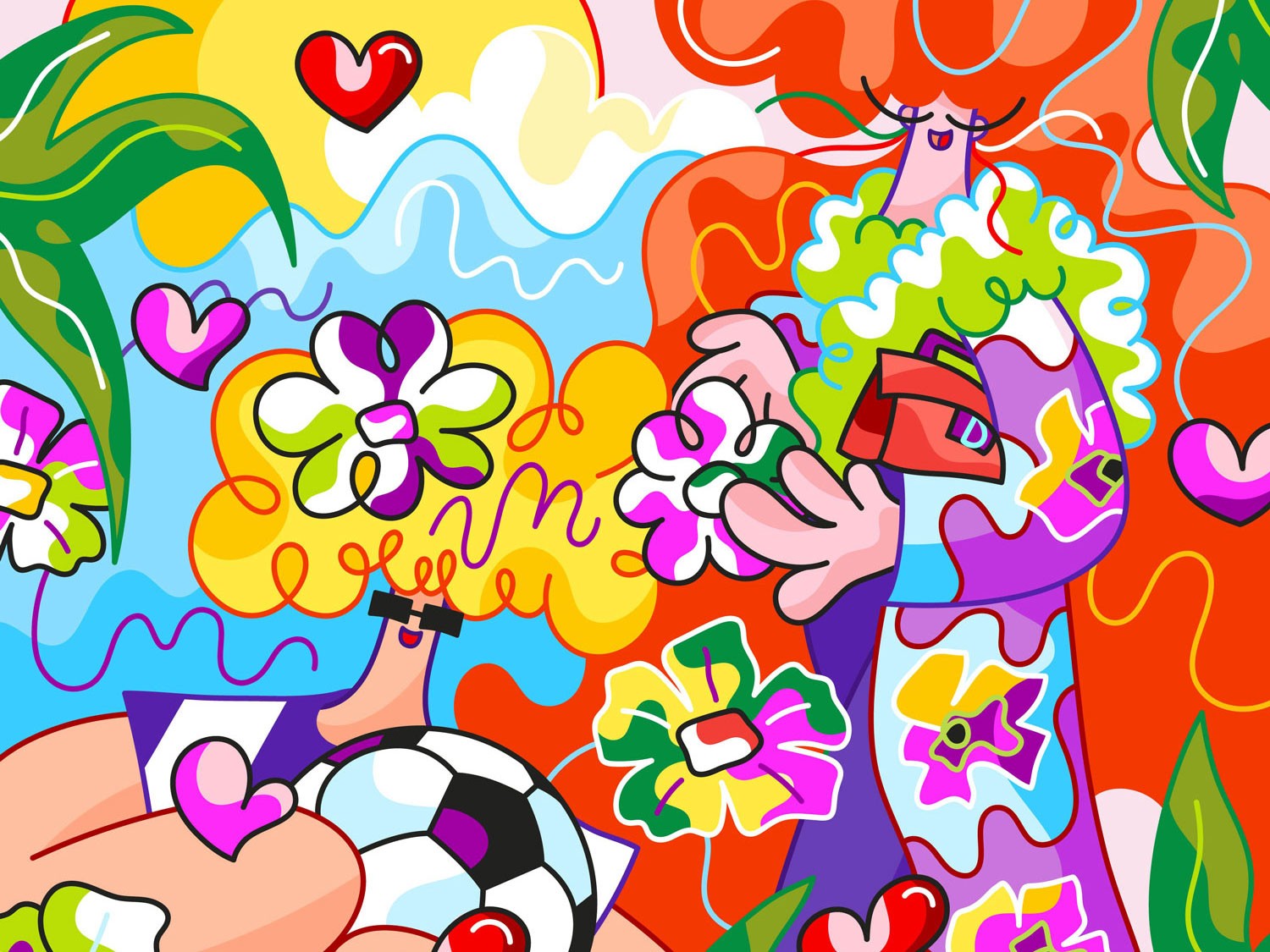
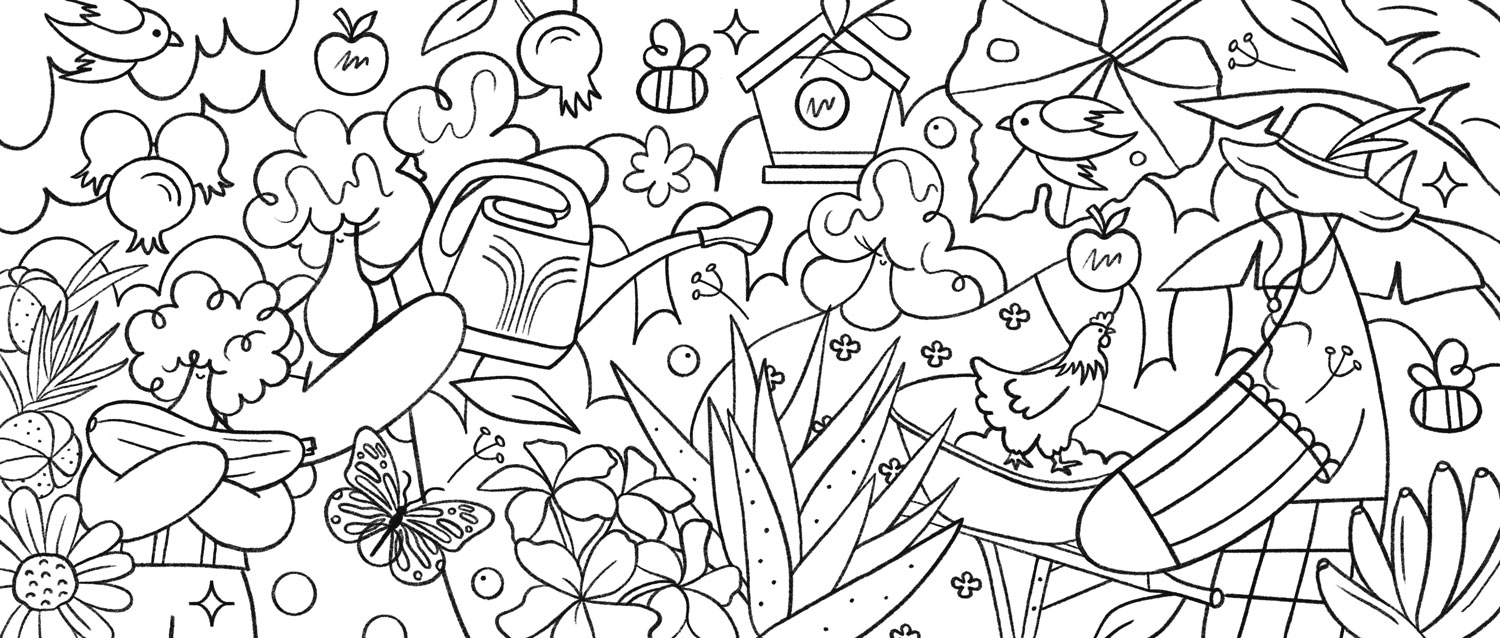
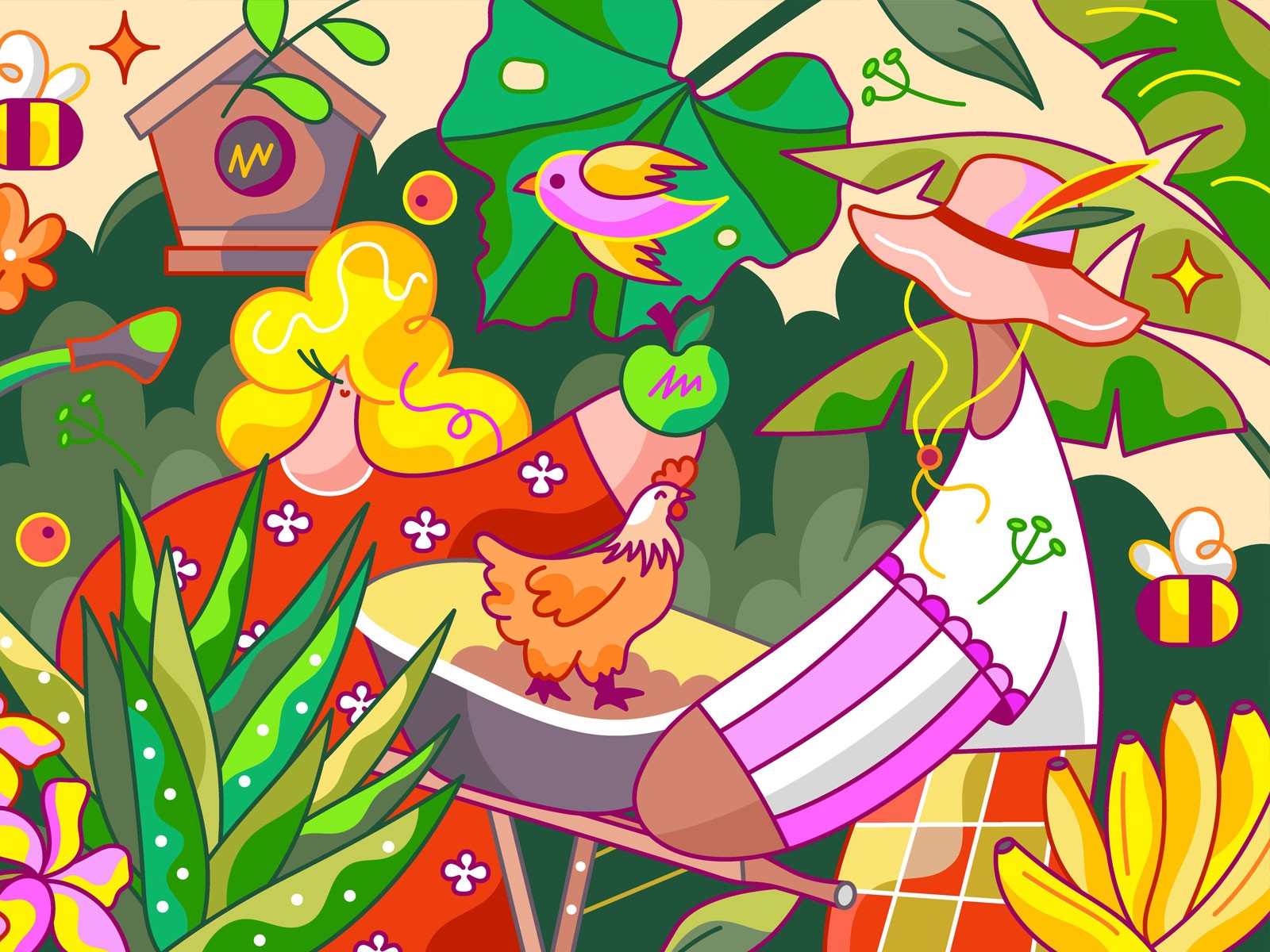
Speaking of uplifting, I am the creator behind the illustration I feature in this essay. A piece that I made for the Farm + Food Lab on a volunteer basis (my choice). A beautiful garden, farm, and outdoor classroom in the middle of Irvine’s Great Park. I created this illustration for their website and promotional materials, and am now working on adapting it to make it a mural within the physical space itself.
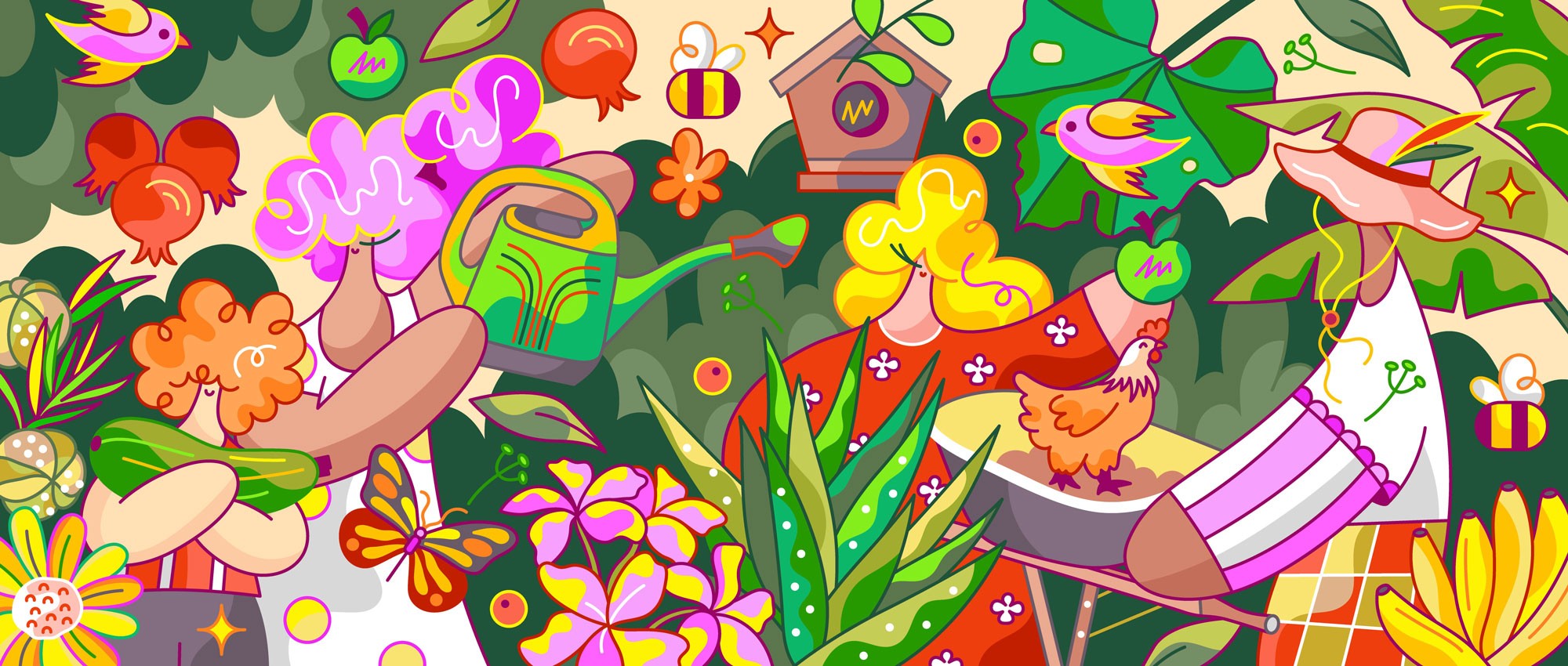
The reason I’m saying this is not to show off (maybe a little), but to illustrate the alternative that is a very possible reality where both parties can benefit.
That said, Farm + Food Lab is not among the 14 small businesses I wrote about. That outreach happened in San Francisco before I moved to Orange County a few weeks ago. I contacted Farm + Food Lab separately to volunteer because I now live nearby and because spending more time around nature has a healing effect on my nervous system.
If someone were to analyze this partnership from a value extraction perspective (the only one that seems to matter in the world we currently live in), of course, there is value. For them to have a custom illustration created by an artist whose style they connect with and to bring more joy into the space. For me, to start meeting people in my new community, to have a canvas to work on my first mural, and to have my work exist in Irvine as a stepping stone for expanding my client network.
But I wonder if we could just for a second remove value out of the picture? I can't help but feel like in this race into our graves we've become so blindfolded by being told what to want and not want, how to live, what the goals are, where to look… That we didn't just get out of touch with ourselves and each other, but also forgot that some things can be done just because.
Me reaching out to volunteer and redesign AI-generated coloring pages on kids' menus. Not for exposure or out of hope to be paid. But because as a mother, I want for my kid and all the other kids who come eat at a restaurant to have a fun and intentional page to engage with.
And because I believe that creativity isn't creative when it is automated. And because when I see AI-generated visuals, I think of all my brothers and sisters whose work was unethically scraped.
And because I genuinely want to help and use my skills to support a cause I believe in.
I get it, right now, we still live in the world where every decision is driven by profits. That if it's not, it doesn't belong. But it wasn't always this way, and it won't be this way forever either.
I personally disagree that skills should only be exchanged for money. Even for artists. In fact, that exchange has proven itself useless at protecting our industry from collapsing. I know this first-hand after working and living in San Francisco for seven years, and watching my fellow creatives lose their jobs overnight. In 2022, 2023, 2024, 2025, 2026. I'm sure, the trend will continue.
If market was truly the only legitimate channel between people, we would all be flourishing now. But we aren't, and it has nothing to do with artists gifting labor to their communities. No. It has everything to do with tech companies turning every product into an extraction farm and throwing ethics in a trash can.
It's true that it's become hard to do or not do something based on our moral principles. Because we're being forced into a reality where even if we wanted to act accordingly, we simply can't avoid hypocrisy. Especially when using products developed by unethical monopolies that became a requirement for us being functional members of society and doing our jobs.
This system design has been stripping us of our beautiful humanity and depth. And the closer I look, the angrier I get about just how much of it we've lost already.
I also understand that the way I'm ending this essay may not sound satisfying or practical because it doesn't offer easy-to-take steps to fix the problem. Yes, those convenient steps we've been trained to crave because the moment friction arises, rejection rushes to follow.
The rejection I received from that one business that responded to my email and told me they don't work with people who criticize their business decisions. Expectedly, defensive. But also fair enough.
I'm not outlining any easy steps because I don't see any that would profoundly change the situation. If I could highlight one thing out of this obnoxiously long essay, it's my message to small businesses and creatives alike to not avoid but find each other. Give each other hands and pull up. Learn to be able to have conversations around generative AI that don't end in a bloodbath.
Get comfortable being uncomfortable because if regulations keep catching up at the speed of the slowest snail as they are now, things will probably keep getting uncomfortable. And no, it's not a sign to use AI chat bots to replace your entire social circle. I believe it's a sign to start doing the opposite.
Saying hi to a neighbor. Giving a compliment to a stranger. Meeting friends for dinner and leaving smartphones at home. Joining a book club at a local library. Learning to care for a plant in a community garden.
Asking your local small business if they need help with design materials.
Supporting your local artist. A small business of one.
Share
Copy link